Venice 2089: Exploring a Flooded Future Venice on a Hoverboard
You play as Nova, a teenager returning to Venice after exams, only to find your hometown half-underwater and slowly emptying out. The water keeps rising, people are leaving, and your grandfather still fixes boats even though nobody’s ordering them anymore. Venice 2089 gives you a hoverboard and a drone, then lets you explore this drowning city at your own pace.
There’s no saving the world here. You’re just watching a place disappear, talking to the people who refuse to leave.
Venice 2089
What the Game Actually Involves
Venice 2089 focuses on exploration and conversations. You ride your hoverboard through flooded canals, perform tricks on railings, use your drone to collect floating tokens, and talk to locals about whether staying in Venice makes sense anymore. The game takes place over several in-game days, and the tides change which areas you can access. Low tide opens certain streets, high tide floods them again, so you’re constantly adjusting your routes.
The gameplay stays simple. No combat, no real failure states, just moving through the city while helping people with small tasks. Collect feathers for someone who feeds birds, help your neighbor repair his boat, decorate your own living space. The hoverboard controls feel responsive, tricks chain together smoothly, and the camera shifts perspective as you move between canals and rooftops. Your drone handles vertical challenges, grabbing items Nova can’t reach or scaring birds to drop collectibles.
Each day brings new conversations, some tied to tide levels, others to story progression. You learn why Leo wants to escape, why others refuse to abandon Venice despite everything. The relaxed pacing works most of the time, though quest timing can feel off. If you complete a multi-day task early, the dialogue might not match your progress, which breaks the immersion slightly.
Strong Visuals and Dynamic Soundtrack
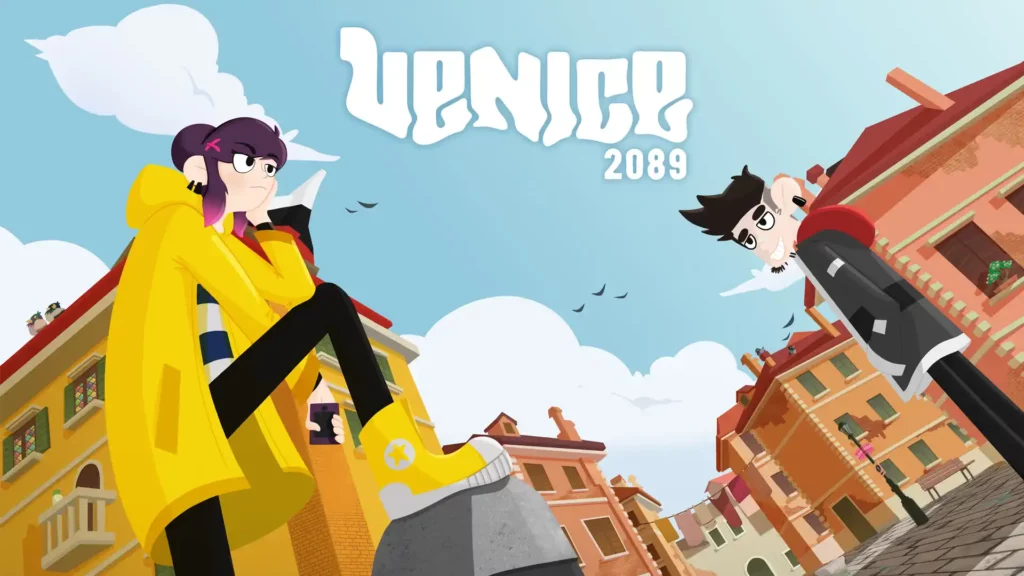
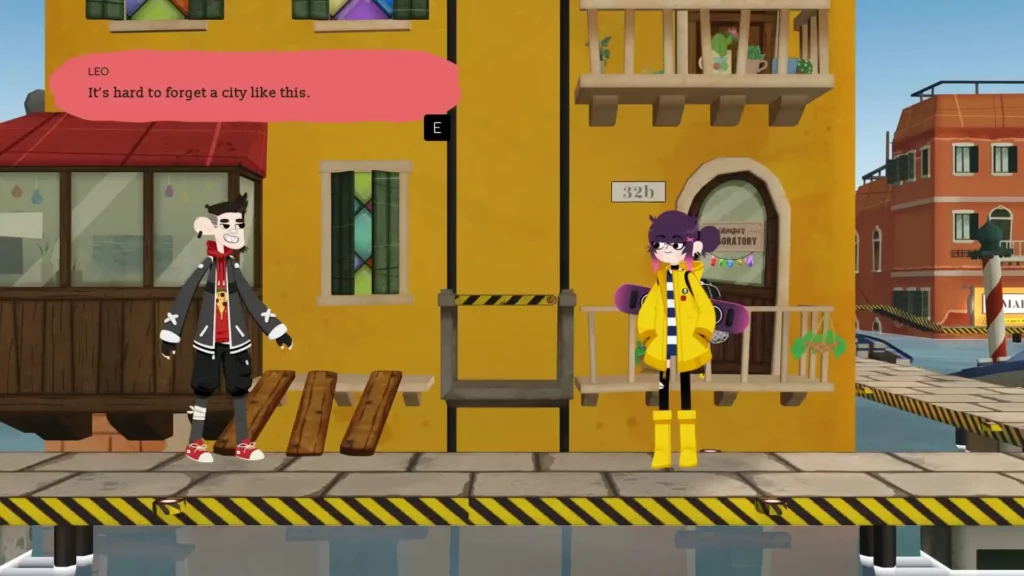
Venice 2089 uses 2.5D art, combining 3D environments with 2D character sprites. The style works surprisingly well. Bright colors, warm lighting, wooden scaffolding against crumbling stone buildings, bits of neon future-tech scattered throughout. Players consistently praise the visuals, “very pretty,” “absolutely wonderful”, and the mix of 3D spaces with 2D characters gives the game a distinct look without feeling gimmicky.
The soundtrack handles most of the atmosphere. Lo-fi beats play throughout, but they’re dynamic. Collecting tokens while riding adds musical layers, building the track as you move. The effect is subtle but effective, making exploration feel rhythmic without being intrusive. Voice acting is minimal, which some players would like more of, but the music fills the space well enough that quiet moments still work.
Nova’s Personality Lands Most of the Time
Nova’s internal monologue leans heavily on sarcasm and internet humor. She jokes constantly, deflects serious moments, comments on how strange her situation is. When it works, conversations with her grandfather, frustration about feeling trapped in a dying town, it feels genuine. When it doesn’t, the writing tries too hard to prove she’s young and online.
NPCs have distinct personalities but limited screen time. Your grandfather is warm and stubborn, refusing to leave Venice no matter what. Leo feels suffocated, desperate to escape before the city takes him down with it. The woman who feeds birds talks about memory like it’s all she has left. They’re written well enough, but stiff animations and occasionally flat dialogue delivery limit the emotional impact. You’re reading more than watching, which works for a low-budget indie but doesn’t always land the bigger moments.
Climate Change as Setting, Not Sermon
Venice 2089 doesn’t lecture about climate change. It shows you a city that’s vanishing. Water levels rise, population shrinks, people argue about whether trying to save Venice makes sense or if staying is just denial. The game presents this as context rather than message, which makes it more effective.
You’re not stopping the floods or rallying the community. You’re trying to understand why people choose to stay somewhere that’s dying. That restraint makes the theme work better than if the game had tried to hammer home a point.
Player Reception and Technical Issues
Steam reviews and community feedback lean positive with some reservations. People appreciate the art direction, atmosphere, and soundtrack. “Relaxing,” “cozy,” “great vibe” come up repeatedly. The hoverboard feels good to control, the world looks distinctive, and the slower pacing appeals to players looking for something less intense.
Common complaints focus on technical problems. Scene transitions stutter, performance drops on older hardware, loading times feel longer than they should. Quest pacing tied to the tide system can create awkward moments when you finish objectives out of the intended sequence, leaving dialogue that doesn’t match your progress. Some players want more varied music, deeper character animations, or voice acting to fill the quieter sections.
Venice 2089 sits around 7.5/10 on Steam. Players recognize what the game does well while acknowledging the rough edges. It started as a student project before becoming a full release, and both the creativity and the limitations show.
Brief but Focused Experience
Venice 2089 runs about two to three hours. You can finish the main story in one session, maybe stretch it to two if you’re exploring thoroughly or hunting collectibles. The short runtime works in its favor, there’s no padding, every conversation matters, and nothing feels stretched out unnecessarily. But some story threads feel underdeveloped. Side characters get one or two meaningful scenes before fading into the background, and the ending doesn’t resolve much. That fits the theme of ongoing loss, though it might frustrate players expecting more closure.
Replay value is limited unless you’re interested in finding every collectible or experimenting with dialogue choices, which don’t branch significantly. Venice 2089 is designed as a single playthrough experience, memorable for its atmosphere and world-building rather than multiple endings or varied outcomes.
Worth Playing Despite the Flaws
Venice 2089 earns its 8/10 by getting the atmosphere right and knowing when to pull back. The visuals are striking, the soundtrack fits perfectly, and the world feels lived-in despite the modest scope. Nova’s voice works when the writing doesn’t push too hard, and the climate theme lands because it stays understated. Exploration feels good, hoverboard controls are solid, and the runtime stays focused without wasting time.
The technical issues are noticeable, though. Quest pacing stumbles occasionally, and character animations could use more polish. This is a promising indie game that delivers on mood and theme but shows its development constraints in execution. If you want a story-driven game about a drowning city and the people who won’t leave it, Venice 2089 is worth your time. Just expect atmosphere and personality over technical polish.
FAQ
Is Venice 2089 beginner-friendly?
Yes. The controls are straightforward, the hoverboard is easy to learn, and there’s no combat or complex mechanics to worry about.
Do I need a powerful PC?
No. Venice 2089 runs on most mid-range systems, though some players report performance issues during scene transitions.
How long does it take to complete?
Two to three hours for the main story. You can extend that if you’re collecting everything or replaying for missed dialogue.
Is there replay value?
Limited. Dialogue choices don’t branch much, and collectibles are the main reason to revisit unless you just want to experience the atmosphere again.
Where can I play Venice 2089?
Available on PC, Nintendo Switch, Xbox, and PlayStation digital stores. There’s also a demo on itch.io.
Don’t hesitate to check out our reviews of other indie games:
https://playglio.com/category/reviews/
Images sources : Steam Venice 2089