Dead Pixels: Top Xbox 360 Zombie Games Indie Title Worth Playing
Dead Pixels doesn’t apologize for what it is. You spawn in a randomly generated city overrun by zombies, and your job is to shoot, scavenge, and survive long enough to reach the evacuation point. No elaborate backstory, no character development, no bullshit. Among the countless xbox 360 zombie games indie developers released, this one respects your intelligence enough to skip the hand-holding and lets you figure out why running into a horde with 12 bullets is a bad idea.
Dead Pixels
I’ve played through this game dozens of times since the Xbox 360 indie scene was actually alive, and it still scratches that “one more run” itch. Dead Pixels built its reputation on a simple premise executed well: manage your resources, don’t be stupid, and maybe you’ll survive. That focus is exactly why it works when other zombie games from that era feel bloated and forgettable.
The Core Loop: Shoot, Loot, Don’t Die
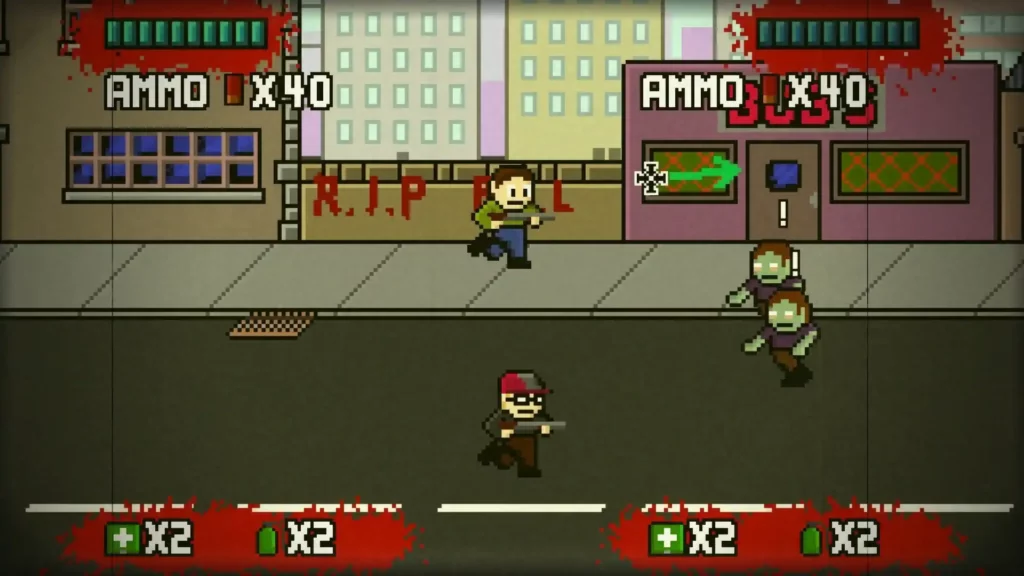
Dead Pixels gameplay strips survival down to essentials. You move left to right through procedurally generated city blocks, clearing buildings for supplies, spending cash at shops, and trying not to waste ammo on every shambling corpse that crosses your path. Each run takes about an hour if you’re competent, which makes it perfect for sessions where you want something satisfying without committing to a 40-hour campaign.
The tension comes from resource scarcity. Ammo isn’t infinite, health kits cost money you need for weapon upgrades, and guns jam if you neglect maintenance. You’re constantly making trade-offs: clear this building for potential loot, or conserve bullets and keep moving? Buy armor now, or save for a better rifle at the next shop? The game never gives you enough of everything, so every decision matters.
Light RPG mechanics add just enough progression to keep runs feeling different. You level up by killing zombies, which improves accuracy and reload speed. Shops sell better gear as you progress. Starting with a weak pistol and ending with a pump shotgun that turns zombie heads into paste feels earned because you had to grind for it. The progression isn’t revolutionary, it’s just effective enough to make you want to push for one more upgrade before calling it a night.
Co-op Transforms the Experience
Playing Dead Pixels in co-op transforms it from a decent survival game into something genuinely memorable. Instead of managing everything solo, you’re splitting resources, covering angles, and arguing about who gets the last health kit. The game doesn’t coddle you, friendly fire is on, ammo is still scarce, and one player making a dumb call can wipe both of you.
The best moments happen when coordination breaks down. A zombie horde spawns unexpectedly, your partner runs out of shotgun shells mid-fight, and you’re trying to cover them while backing toward a safe house. Those improvised scrambles feel tense because the game doesn’t script them. You succeed or fail based on whether you can communicate under pressure, not because the AI decided to be generous.
Local multiplayer adds weight to every choice. Hoarding supplies might keep you alive, but it leaves your partner underpowered and turns them into a liability. Sharing resources fairly requires trust, and that dynamic creates a cooperative experience most online shooters can’t replicate. The co-op mode is why people still remember Dead Pixels when discussing xbox 360 zombie games indie marketplace produced years after it shut down.
Random Generation Keeps Runs Interesting Enough
The procedurally generated city layouts prevent Dead Pixels from feeling completely repetitive, though you’ll start recognizing patterns after five or six runs. Buildings repeat, shop placements follow predictable logic, and optimal routes emerge once you understand the systems. But the randomness introduces enough variability that no two runs play out identically.
Some runs drop a powerful rifle in your lap early and shower you with cash. Others make you scrape by with a busted pistol and barely enough ammo to reach the next safe house. That inconsistency forces adaptation, you can’t rely on memorizing a perfect route like in games with static level design. Dead Pixels doesn’t guarantee fairness, and honestly, that’s part of the appeal. The runs where RNG screws you feel frustrating in the moment, but they make the successful runs hit harder.
Replayability comes from chasing better gear and testing different strategies as much as the random generation itself. Maybe you focus on upgrading one weapon instead of spreading cash across multiple guns. Maybe you skip risky buildings to conserve ammo. The game gives you enough room to experiment without overwhelming you with options, and that restraint keeps the core loop tight.
Where Dead Pixels Shows Its Age
The controls feel like wrestling a shopping cart with a busted wheel. Movement lacks precision, aiming requires constant adjustment, and melee combat is so clunky you avoid it unless zombies are literally chewing on your face. These issues aren’t catastrophic, you adapt after a few runs, but they prevent the game from feeling as responsive as it should. Some deaths happen because you misjudged a situation; others happen because the controls didn’t cooperate.
Enemy variety is basically nonexistent. Zombies shuffle. Some shuffle faster. A few explode when they get close. That’s the entire roster. The game tries to compensate with quantity and positioning, but by your fourth playthrough, encounters start blending together. More enemy types with distinct behaviors would’ve added tactical depth and forced you to adjust strategies mid-run instead of just pointing and shooting.
The audio doesn’t do Dead Pixels any favors either. Gunshots and zombie groans loop endlessly without variation, and the soundtrack fades into the background so thoroughly I couldn’t hum a single track if you paid me. It’s functional, sounds happen when they’re supposed to, but it doesn’t enhance the atmosphere. For a game built on tension, stronger sound design would’ve amplified the experience instead of just existing in the periphery.
Why I Think The Game Is Still Playable Today
Dead Pixels earned its reputation by doing one thing well instead of attempting ten things poorly. The gameplay loop is tight, the co-op adds genuine depth, and the difficulty feels challenging without crossing into unfair bullshit territory. It doesn’t pretend to be more than a well-executed zombie survival game, and that honesty is why it holds up when other titles feel like relics.
The Xbox Live Indie Games marketplace gave small developers space to publish without corporate oversight, which is how Dead Pixels found an audience. It didn’t need a marketing budget or publisher backing, it just needed to be fun enough that people told their friends about it. That grassroots appeal defined much of the indie scene during that era, and it’s why certain xbox 360 zombie games indie developers created remain relevant while bigger-budget games from the same period collect dust.
If you can track down the PC version or still have a working Xbox 360, Dead Pixels is worth your time, especially if you have someone to play co-op with. It won’t change your life or redefine the genre, but it delivers exactly what it promises: a lean, replayable zombie survival experience that respects your time. Some games age well because they were groundbreaking. Dead Pixels ages well because it was competent from day one and never tried to be anything else. When people ask about the best xbox 360 zombie games indie scene offered, this one deserves to be in that conversation.
Dead Pixels FAQ: Everything You Need to Know
Can I still play Dead Pixels today?
The original Xbox 360 version runs on backward-compatible consoles, though the Xbox Live Indie Games marketplace closed years ago. Steam and GOG host the PC port, which adds better resolution support and controller remapping. Runs smooth on modern hardware without tweaking.
Is Dead Pixels worth playing solo?
Absolutely. The resource management and tension work perfectly alone, forcing you to handle every decision without backup. Co-op adds collaboration, but solo play emphasizes the survival stakes and makes every bullet count more.
How long does a full run take?
About 45 minutes to an hour depending on your scavenging habits and how often you die. Short enough for quick sessions, long enough to feel like you’ve accomplished something when you reach the helicopter.
Does Dead Pixels have controller support on PC?
Yes, and it’s basically required. Keyboard and mouse controls exist but feel awkward for a side-scrolling shooter. Plug in an Xbox or PlayStation controller and you’re set.
What makes Dead Pixels different from other xbox 360 zombie games indie developers made?
The RPG progression and shop system. Most indie zombie shooters were pure arcade action, but Dead Pixels forces you to manage cash, upgrades, and equipment between safe houses. That economy layer adds strategy beyond just pointing and shooting.
Is the difficulty fair or frustrating?
Mostly fair. Deaths usually come from bad resource management or getting greedy clearing too many buildings. The random generation can occasionally screw you with bad weapon spawns, but runs are short enough that restarting doesn’t feel punishing.
Can I play Dead Pixels on modern consoles?
Not officially. The Xbox Live Indie Games program ended, so no Xbox One or Series X/S support. Your best bet is the Steam version or tracking down an original Xbox 360.
Don’t hesitate to check out our reviews of other indie games:
https://playglio.com/category/reviews/
Images sources : Steam Dead Pixels